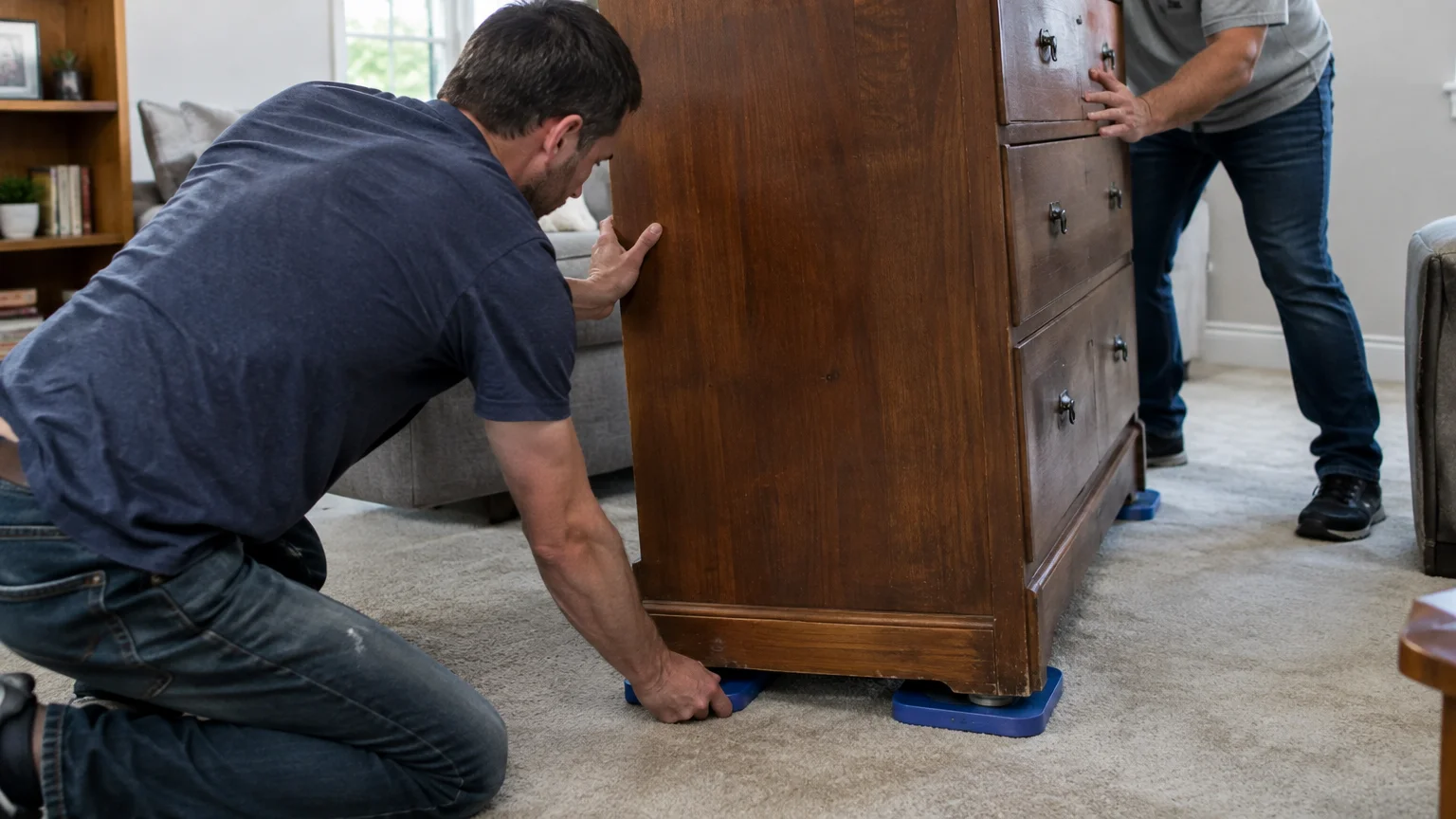
The safest way for how to move heavy furniture by yourself on carpet is to empty the piece, clear the route, protect the floor, and use sliders or a dolly. Move in short sections with steady control. If the furniture is unstable, fragile, too heavy, or hard to turn, stop and get help.
Moving a sofa, bed, cabinet, or table may seem easy at first. Then it catches on carpet, reaches a doorway, or meets hardwood. A simple plan helps prevent floor marks, wall damage, sore backs, and broken furniture.
Cheyenne Wyoming Movers helps people plan hard moves. The goal is not to rush. The goal is to control the furniture at every part of the route.
Table of Contents
- How do you move heavy furniture by yourself on carpet?
- What should you do before moving heavy furniture?
- Which tools help move furniture across carpet safely?
- How do you move heavy furniture across low-pile carpet?
- How do you move heavy furniture across thick carpet?
- How do you move heavy furniture across hardwood floors?
- How do you move furniture between carpet and hardwood?
- How can you move heavy furniture through a narrow doorway?
- What mistakes make moving heavy furniture more dangerous?
- When should you hire help to move heavy furniture?
- Frequently Asked Questions
- Key takeaways
- Conclusion
How do you move heavy furniture by yourself on carpet?
The safest method is to put the furniture on sliders after clearing the route. Keep the item level and push from a strong position. Stop often to check the floor and path. Never drag bare legs across carpet. They can catch, bend, or tear the carpet.
Assess the furniture, route, and floor surface
Check the furniture before moving it. Look for loose legs, glass panels, drawers, doors, and shelves that may shift. Remove anything that can fall or add weight. Empty a bookcase before moving it, even across a short room.
Walk the full route before touching the furniture. Check corners, doors, steps, rugs, vents, and floor changes. Measure tight areas where the piece must turn. The route needs room for the furniture, your body, and a safe hand position.
Choose a controlled sliding method
Furniture sliders are smooth pads that go under legs or solid contact points. They lower drag, but they do not remove every risk. Put one under each main contact point. Keep the furniture centered on the pads.
Move in short sections. Push with your legs while keeping your back straight. Do not pull hard from one side. Pulling can twist the frame or make it tip. If the furniture does not move with steady pressure, stop and change the plan.
What should you do before moving heavy furniture?
Before moving heavy furniture, empty it, measure the route, protect nearby surfaces, and choose a safe resting place. These steps take less time than fixing a wall or freeing a stuck cabinet.
Empty, measure, and prepare the furniture
Remove books, dishes, clothing, drawers, cushions, and loose parts. Wrap fragile items on their own. Use painter’s tape to hold drawers and doors closed. It is less likely to leave sticky marks than strong packing tape.
Measure the furniture at its widest, tallest, and deepest points. Then measure the doorway, hall, stair landing, and final space. Include trim, door hardware, and the angle needed for turns. A piece may fit straight through a door but fail when it must rotate.
Cover corners with moving blankets or soft pads. Do not cover the bottom so much that sliders cannot sit flat. If the piece can come apart safely, label each part. Keep the hardware in a sealed bag.
Clear doors, hallways, and turning areas
Remove rugs, lamps, small tables, toys, and trip hazards. Open doors fully and secure them. Keep pets and children away until the move is done.
Cover wall corners and door trim with blankets or padded covers. On hardwood, use a clean runner or floor cover made for moving. Avoid loose plastic. It can slide under your feet.
Cheyenne Wyoming Movers can help Cheyenne homeowners decide if a room-to-room move is right for DIY work. A short move still needs care when furniture is tall, top-heavy, or close to a wall.
Which tools help move furniture across carpet safely?
The most useful tools are furniture sliders, moving blankets, lifting straps, and a suitable dolly. The right tool depends on the furniture, floor, weight, and route. Tools should give you more control, not tempt you to handle too much alone.
Furniture sliders, moving blankets, and lifting straps
Use carpet sliders made for carpet. Small hard-floor pads may not work well. The slider should cover the furniture foot or base. If the bottom is uneven, use a broad platform that keeps the load steady.
Moving blankets protect corners and walls from light contact. They do not make it safe to drop or catch furniture. Lifting straps can share weight between two people. Both people still need firm footing and clear words.
A basic moving kit may include:
- Furniture sliders that match the floor surface
- Clean moving blankets and corner protection
- A four-wheel furniture dolly for suitable items
- Lifting straps used by people who can control them
- Painter’s tape, labels, and bags for loose hardware
When to use a dolly or furniture jack
A dolly can help with tall, solid items that stay balanced. Strap the furniture to the dolly before moving it. Keep the load low and move slowly over thresholds. A furniture jack can lift one side enough to place sliders. Use it only on a stable surface and with care.
A standard hand truck is not right for every piece. Tall cabinets, glass furniture, pianos, aquariums, and weak items can shift without warning. Equipment does not replace a second person when the load is unstable.
How do you move heavy furniture across low-pile carpet?
Low-pile carpet often lets sliders move more easily. The furniture can still catch on seams and edges. Place sliders evenly, keep the item level, and push in the travel direction.
Position sliders and protect furniture legs
Lift one corner only as much as needed to place a slider. Do not put your fingers under a heavy base. Use a moving wedge, lifting tool, or safe method that keeps hands clear.
Place each slider fully under the leg or base. A slider that sits partly outside can fold or shoot away. Check that the pads face the right way for carpet. Make sure no grit is trapped underneath.
For narrow legs, use sliders made for legs. You can also use stable protective pads. Avoid cardboard when it bends or tears. A weak pad can leave one leg stuck while the rest moves.
Push instead of pulling when possible
Pushing often gives better control than pulling. Stand behind the item with both feet planted. Keep your hands at a safe height. Move a short distance, then check the sliders, walls, and furniture.
Do not push from the top of a tall cabinet. This can make it tip. Push near the center of a strong frame instead. If the item leans, stop and lower it safely.
How do you move heavy furniture across thick carpet?
Thick carpet creates more drag and may hide uneven spots. Use wide sliders or a stable moving platform. Expect shorter movements. Do not force furniture when the carpet bunches beneath it.
Reduce friction without damaging the carpet
Smooth the carpet and check for loose edges first. A slider can catch on a seam or pull carpet fibers when its edge is damaged. Use clean equipment with rounded edges. Check it before each section.
A broad platform may work better than small sliders under heavy furniture. It spreads the load and helps prevent sinking. The platform must be strong, flat, and large enough to keep the furniture in place.
Never use oil, water, or household sprays to make furniture move. These products can stain carpet and create a slipping risk.
Handle thresholds and uneven transitions
Thresholds need extra care because sliders can stop suddenly. Approach the change straight when possible. Use a threshold ramp or firm board that cannot slide.
A second person should watch the front edge and guide the load. Do not lift one end high while pushing the other. This can shift the center of gravity and make the furniture fall.
If thick carpet prevents steady movement, stop. Loading and Unloading Help may be safer than repeated pushing. This is especially true when furniture must enter a truck, pod, or container.
How do you move heavy furniture across hardwood floors?
Protect hardwood by keeping grit away, using clean floor-safe pads, and avoiding sudden drops. Even a small stone under a slider can leave a deep mark. Move slowly and check the floor as the furniture travels.
Prevent scratches, dents, and scuff marks
Sweep or vacuum the route before moving. Lay down clean moving blankets or a firm runner. Secure the cover so it cannot bunch beneath a foot or slider.
Use sliders made for hardwood and check that they are clean. Felt pads may work for light furniture, but they are not right for every load. Plastic sliders may move well on wood but too quickly on polished floors.
Never drag bare metal, wood, or plastic across hardwood. Do not use a rubber-backed rug unless the floor maker allows it. Some backings can leave marks or hold moisture against the floor.
Control movement on polished or slippery flooring
Polished floors may let furniture move faster than expected. Keep your hands ready to stop it. Use a helper when the item can gain speed. Make short pushes instead of one long shove.
Use a dolly only when its wheels will not harm the floor. The load must stay balanced. Approach slopes and thresholds straight. If the route feels slippery, change the method instead of adding water or lubricant.
How do you move furniture between carpet and hardwood?
Plan the transition before moving. Carpet creates drag, while hardwood may let the same furniture slide quickly. Protect both surfaces and change tools only when the item is stable.
Plan for the change in friction
Put the furniture on sliders that suit the first surface. Stop before the transition and check each slider. Add a firm bridge over the threshold when there is a height change.
Keep the load square to the transition. A diagonal approach can make one leg catch and twist the frame. Move one short section at a time. Have a helper watch the leading edge.
Do not pull a heavy piece from carpet onto hardwood by one corner. The far legs may stay behind while the near side moves. This can bend the frame, break a leg, or make the piece tip.
Protect flooring at thresholds and doorways
Cover the threshold with a clean, secure board or moving ramp when suitable. Make sure it does not rock or slide. Protect door trim and wall corners before the furniture reaches the opening.
If the floor changes height sharply, the item may need to be lifted instead of slid. This is a point where one person should usually stop. Extra hands, a stable dolly, or professional equipment may reduce the risk.
How can you move heavy furniture through a narrow doorway?
Measure the furniture and doorway first. Remove doors or parts only when safe. The usual method is to tilt, rotate, and guide the piece through its widest opening. Do not guess from the front-to-back view.
Measure the furniture and opening before lifting
Measure the door opening between the stops, not just the full frame. Check the ceiling, trim, hinges, and nearby walls. Compare these measurements with the furniture in the position needed for the turn.
Protect the door and frame before testing the route. Remove the door from its hinges if this gives more room and the door can be handled safely. Store hinge pins and hardware together.
Tilt, rotate, or disassemble in the right order
Start with the least risky change. Remove cushions, legs, shelves, doors, or drawers when they come off safely. Keep notes about each part so the furniture can be put back together.
For a tall piece, tilt from a strong frame section, not a weak panel. Keep the heavier end low when possible. One person should guide the top while another controls the base.
Never force furniture through a doorway. A stuck item can damage the wall and may need a sudden pull to free it. Professional Furniture Movers can handle stairs, tight spaces, and bulky pieces with suitable equipment.
What mistakes make moving heavy furniture more dangerous?
The most common mistakes are poor measuring, rushing, lifting with a rounded back, and moving unstable furniture alone. A careful pause is safer than trying to catch furniture after it starts to fall.
Avoid twisting, rushing, and lifting beyond your capacity
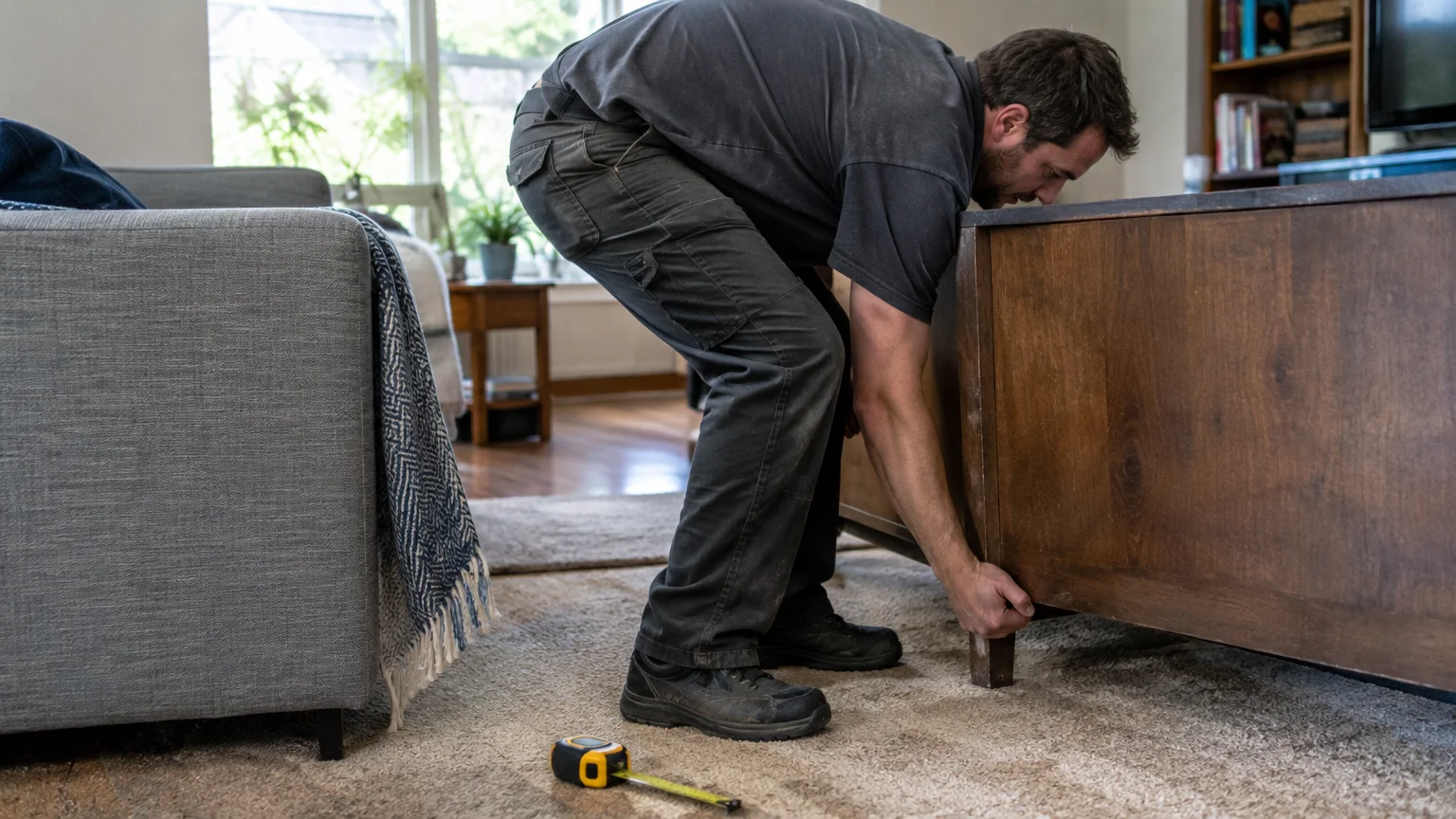
Keep the load close when lifting. Turn with your feet, not your waist. Do not hold your breath or jerk the furniture upward. If it feels too heavy during the first test lift, lower it and change the plan.
Avoid standing between heavy furniture and a wall. Leave space to step away. Keep hands out of pinch points near legs, doors, hinges, and thresholds.
Common warning signs include:
- The furniture leans while sitting on level ground
- A slider keeps slipping from under the load
- The route includes stairs, sharp turns, or a narrow landing
- Glass, stone, or loose parts may break during movement
- You cannot keep both feet planted while moving it
Know when one person should not move it alone
One person should not move an item alone when it is tall, fragile, top-heavy, damaged, or hard to grip. Pianos, large safes, full aquariums, and some stone pieces need special planning. The same is true for furniture that must go down stairs.
A second person does not guarantee safety, but clear roles can help. One person leads the route and gives short commands. The other controls the load. Both should agree on where to stop before lifting.
When should you hire help to move heavy furniture?
Professional help makes sense when furniture is too heavy for steady control, the route has stairs or tight turns, or the floor and item are valuable. Trained movers can bring suitable equipment and lower the chance of damage or injury.
Signs the furniture, route, or flooring needs professional equipment
Ask for help when a piece cannot move without straining, tilting sharply, or blocking the only exit. Help is also wise for narrow doors, steep stairs, long carries, polished hardwood, and thick carpet.
You do not need a professional for simple checks, measuring, clearing a route, or moving a light item with safe control. Stop when the task goes beyond those basic steps.
Apartment Movers can help when elevators, halls, stairs, or shared entrances limit the move. Commercial & Office Movers may suit desks, filing cabinets, equipment, and business moves. Local Movers can help when furniture must leave the property.
How careful movers can reduce damage and injury risks
Trained movers can plan the route, protect floors, use lifting tools, and talk through turns. They can also decide when furniture should come apart before transport. This matters when the piece will not fit through a doorway in one part.
Before arranging help, describe the furniture, floor types, stairs, door limits, and final room. Clear details help the moving team prepare. Cheyenne Wyoming Movers serves people who need a safer way to handle heavy furniture and local moving tasks.
Frequently Asked Questions
Can one person move a heavy couch across carpet?
One person may move a small, stable couch across clear low-pile carpet with sliders. The couch should be empty and easy to control. A sleeper sofa, reclining sofa, or sectional can shift without warning. If it catches, leans, or blocks a door, stop and get help.
How do you move a couch through a narrow door?
Measure the couch and opening first. Remove cushions and legs, then try the angle that keeps the narrowest side toward the opening. Protect the frame and trim. If the couch must tilt high or twist sharply, do not force it.
Can a mattress be moved by one person?
A light mattress may be carried by one person when the route is short and clear. Mattresses bend, block vision, and catch on doors. Use a mattress bag and a second person for stairs, long carries, or tight turns. Do not drag it across hardwood.
How should someone move a fish tank?
Empty a fish tank fully before moving it. Water, gravel, decorations, and equipment add weight and stress the glass. Wrap the empty tank with padding and carry it level. Large or fragile aquariums need experienced help because a twist can damage the seams.
Is a moving company better than moving heavy furniture alone?
DIY works for light, stable furniture on a clear route. A moving company is safer for heavy, fragile, tall, or awkward pieces, especially near stairs and narrow doors. Movers can bring equipment and extra hands. Choose based on control and risk, not distance alone.
Key takeaways
- Measure the furniture, doorway, route, and floor changes before moving.
- Empty furniture and secure loose doors, drawers, shelves, and cushions.
- Use clean sliders made for the surface and protect hardwood from grit.
- Push in short, controlled sections instead of pulling from one corner.
- Stop when the furniture is unstable, too heavy, fragile, or hard to turn.
Conclusion
Moving heavy furniture across carpet and hardwood is safest when you plan the route, tools, and floor surfaces first. Sliders can help on carpet, while clean floor protection and careful control matter on hardwood. Narrow doors, stairs, fragile items, and top-heavy furniture need extra care.
A homeowner can handle a simple move when the furniture stays stable and the route is clear. For difficult pieces, moving help can save time and prevent damage. Find out more about our furniture movers in Cheyenne. Contact us to arrange dependable help with heavy furniture, loading, unloading, or a local move in Cheyenne.